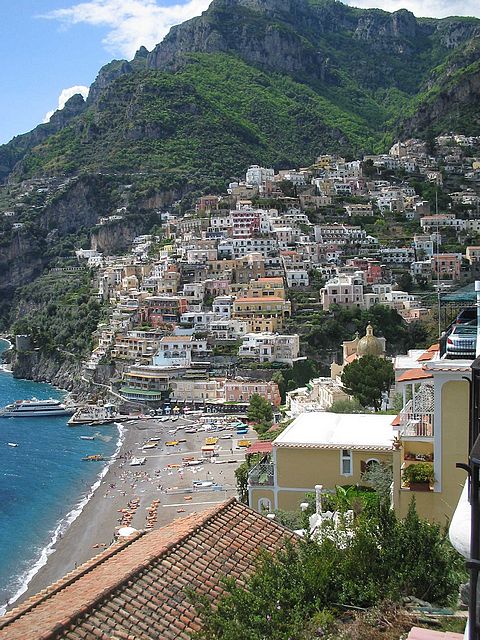
Taormina is one of the most fascinating and prestigious seaside resorts of Italy,called by the famous Greek classic poet Pindaro pillar of heaven,probably those three words identifying that pearl of Sicily are so appropriate and that great figure,exponent and master of the most sublime Hellenic literature who was also famous for its talented inspirations describing outstanding places was totally right.
That divine place nestled on the hilltop of the Northeastern Sicilian coast which offers in all its splendour unforgettable views overlooking the emerald waters of the Mediterranean Sea and with the scenic image of the Volcano Etna so close is considered one of the most picturesque,charming and spectacular places to visit in that sunny island along the Ionian coast.
That divine place nestled on the hilltop of the Northeastern Sicilian coast which offers in all its splendour unforgettable views overlooking the emerald waters of the Mediterranean Sea and with the scenic image of the Volcano Etna so close is considered one of the most picturesque,charming and spectacular places to visit in that sunny island along the Ionian coast.
It is not a case,that such unique Eden was chosen since long time ago as favourite destination by prominent and famed artists and later by the International Jet-Set and in addition it was set of the famous American movie Mighty Aphrodite by Director Woody Allen.
That natural shining diamond is not only a stupendous simple landscape but it is also cradle of a relevant history in all its essence and one of the best picture of the world in which
everything is created on a land which seems to captivate the eyes, mind and
imagination.
In Sicilian language someone sometimes says : "Guadda Taommina,guadda u mare quantu é beddu, tirra nu suspiru e goddi" :and that translatesd means look at Taormina,look at the sea here how is is beautiful, breathing a sigh and enjoy.."
In Sicilian language someone sometimes says : "Guadda Taommina,guadda u mare quantu é beddu, tirra nu suspiru e goddi" :and that translatesd means look at Taormina,look at the sea here how is is beautiful, breathing a sigh and enjoy.."
Among almonds, oranges,cactus and pines trees it turns out
to admire a charming seaside town, the mountains which rise in a semicircle
towards the blue sky,a place where appear villages and castles and again,moving the eyes every visitor will be fascinated by the Etna overlooking the Mediterranean ad that mountain so majestic and imposing stands there in all its grandeur, like an ancient titan.
To the right and left, if you look,emerge all the beauty of the entire eastern coast of Sicily, nature expresses everything and more and in simple words the captivating charm explodes there in all its glory overlooking the Ionian another beauty sang by Pindaro,Homer and all the great poets and philosophers who created some of the most sublime literary works inspiring a multitude of other writers in the following centuries.
To the right and left, if you look,emerge all the beauty of the entire eastern coast of Sicily, nature expresses everything and more and in simple words the captivating charm explodes there in all its glory overlooking the Ionian another beauty sang by Pindaro,Homer and all the great poets and philosophers who created some of the most sublime literary works inspiring a multitude of other writers in the following centuries.
The history of Taormina as one of the major centre of the ancient Sicily is rich of events,starting in 832 B.C,when the Calcidius Ionic Greeks from Euboea founded Naxos the first Greek colony in Sicily,the current Giardini Naxos (I wrote a post about that other resort absolutely splendid).
 .About the former and ancient name of Taormina Tauromenion there are many versions and debates.The site was born with that name still retained even if transformed in the current which means dwelling on the Taurus and built on that mountain.Diodorus of Sicily in the 14th century book proves that the Siculis (Sicilians),which Dionysius of Syracuse,one of the most powerful characters of Megale Hellas (the Magna Gracae) in that period had previously granted them the land around Naxos (Giardini-Naxos today) occupying the Monte Tauro in the years of Olympiad in the 396 B.C.
The Ionic Greeks started to call it Tauromenion from Mediterranean Sicilian sources narrating legends.One of them is about a fabled Minotaur which appears in that mountain and later depicted as a symbol in ancient coins,which attributes and certifies the foundation and the name of the town.
Another one recalls two Princes,probably from a land corresponding the actual Palestine area,called Taurus and Mena,which have founded that settlement,giving it the name Tauromeniti combining the two names,while another version is from Monte Taurus a mountain near Taormina.Despite that according historic documentations,the nascent town was named Tauromenion but not from the names of the Princes previously mentioned but from the words composed by Tauro (the mount) and the ancient Hellenic form Menein,which means stay.
Another one recalls two Princes,probably from a land corresponding the actual Palestine area,called Taurus and Mena,which have founded that settlement,giving it the name Tauromeniti combining the two names,while another version is from Monte Taurus a mountain near Taormina.Despite that according historic documentations,the nascent town was named Tauromenion but not from the names of the Princes previously mentioned but from the words composed by Tauro (the mount) and the ancient Hellenic form Menein,which means stay.
A further supposition is derived by a mixture of words,the local Siculo and the Greek,present in the 16th book by Diodorus from the shape of that hill,very similar to a bull and if you look at it from a particular perspective from one side of the coastline,it reminds the shape of that animal.
Historically Taormina was part of one of the most relevant powers developed in Sicily during the Greek colonisation,Syracuse until when the Imperial Rome in the year 212 BC declared all Sicily a Roman province.
The history is also linked to facts related to the former inhabitants who never accepted with pleasure to be a territory under Siracusa rule and they established a strong alliance with the Romans and Cicero.In the second oration against Verres,mentions that Taormina is one of the three Civitates Foederatae (a provinc towns included in a sort of confederation) a title which the Imperial Rome gave places of a relevant historic importance and for something of important linked to the increasing historic and cultural value of the Empire.
The history is also linked to facts related to the former inhabitants who never accepted with pleasure to be a territory under Siracusa rule and they established a strong alliance with the Romans and Cicero.In the second oration against Verres,mentions that Taormina is one of the three Civitates Foederatae (a provinc towns included in a sort of confederation) a title which the Imperial Rome gave places of a relevant historic importance and for something of important linked to the increasing historic and cultural value of the Empire.
.During the Servile War in the years 134-132 BC,the town was occupied by insurgent slaves,who chose it as a safe stronghold.In the 36 BC during the war between Octavian and Sextus Pompeus, the latter's troops landed at Naxos to retake Taornina which Sextus Pompeus had previously occupied and lost but the rival sent several legions and reconquered for the second time that land.It was also the period in which Octavian became Emperor Augustus in the 21 BC,and establishing there a loyal Roman Colony.
After the fall of Rome,Taormina was invaded by the Vandals and also by the Ostrogoths who occupied a large part of the Italic peninsula and later returning under Roman rule when it was integrated in the Byzantine Empire.
Also the Moorish conquered the town which was renamed Al-Muizzia (Almoeziá is the pronunciation) so called in honour of the Imam Al-Muizz, who was a Fatimid Caliph,a leader who had a constant charismatic influence in the Arab world about military operations of conquests of new lands fiercely driven for years in that area of the Mediterranean until the year 906 AD.
Also the Moorish conquered the town which was renamed Al-Muizzia (Almoeziá is the pronunciation) so called in honour of the Imam Al-Muizz, who was a Fatimid Caliph,a leader who had a constant charismatic influence in the Arab world about military operations of conquests of new lands fiercely driven for years in that area of the Mediterranean until the year 906 AD.
The history changed in the year 1078 when the Normans led by Roger I besieged and conquered after intense battles Taormina.It subsequently under the Swabians, Angevin and later Aragoneses,the town suffered several changes of rulers.
Due all those changes,that flourished ancient centre started a decline for the obvious reasons of a political instability moving under different occupations who gave priority to their own interests and less to the development of a centre which has always been a place highly considered since ancient times.
Due all those changes,that flourished ancient centre started a decline for the obvious reasons of a political instability moving under different occupations who gave priority to their own interests and less to the development of a centre which has always been a place highly considered since ancient times.
The current resort also suffered the siege of the French in the year 1675 and including after a second temporary occupation by France during Napoleon Bonaparte rule,when it joined the Kingdom of the Two Sicilies of the Bourbons until 1860,famous year linked to the unification of Italy linked to the expedition led by Giuseppe Garibaldi with the famous land in Sicily.
Incorporated in the Kingdom of Italy under Savoy rule,former Sovereigns of Piedmont and Sardinia,
during the 2nd World War,the Sicilian resort was occupied by German troops who established there a headquarter of the Wehrmacht and the town also suffered bombings by Anglo-American troops on July 9th, 1943 with luck,despite some little damages,the relevant historic patrimony mainly remained intact.
Incorporated in the Kingdom of Italy under Savoy rule,former Sovereigns of Piedmont and Sardinia,
during the 2nd World War,the Sicilian resort was occupied by German troops who established there a headquarter of the Wehrmacht and the town also suffered bombings by Anglo-American troops on July 9th, 1943 with luck,despite some little damages,the relevant historic patrimony mainly remained intact.
Artistically,that enchanting resort was always a destination of prominent figures with a fame which reached an international level with a multitude of visits by famed characters who made their fortunes,such as Goethe, Nietzsche,Wagner and Wilde among others
All those distinctive artists as many others chose that place as one of their favourite sites to fill their works with divine inspirations admiring under an always warm sun the best you can enjoy in that corner of Southern Europe along the Ionian coastline.
It was also thanks to those personalities linked to the highest intellectual sphere that the resort gained day by day prestige and the promotion generated by such important men increased the desire of visits and stays in that marvellous Sicilian resort by an endless lists of other popular figures who also were inspired by the Classic Hellenic literature reading the masterpieces of Pindaro and others and all them fall in love with that so famous pillar of heaven.
All those distinctive artists as many others chose that place as one of their favourite sites to fill their works with divine inspirations admiring under an always warm sun the best you can enjoy in that corner of Southern Europe along the Ionian coastline.
It was also thanks to those personalities linked to the highest intellectual sphere that the resort gained day by day prestige and the promotion generated by such important men increased the desire of visits and stays in that marvellous Sicilian resort by an endless lists of other popular figures who also were inspired by the Classic Hellenic literature reading the masterpieces of Pindaro and others and all them fall in love with that so famous pillar of heaven.
The visit of Taormina can start from a very emblematic point,retracing an ancient Greek-Roman path, the old road named Via Consolare Valeria which was named in honour of the Roman Consul Marcus Valerius Levinius,who in the 210 BC was governor of Sicily.That was the relevant artery which connected Catania to Messina and Taormina is located 58,0 kilometres from Catania and 51,0 kilometres from Messina two of the most important Sicilian centres.
From its coast Spisone also called by the ancient Greeks Path of the Gods,starting from the current Porta Catania (Catania Gate) which is the entrance of the
town,the classic visit consists in to reach the other ancient door,the Taormina Northern gate today called Porta Messina which was in the past site of the of the Tempio di Giove Serapide
(Temple of Jupiter Serapides).
Well in that concrete geographic point you are is also one of the most flourished cores of the ancient Magna Graecia a door of trade,cultural interchanges and social life in the Greek Sicily before to be Roman and between those two "Porte"there are all the artistic and historic treasures of that magnificent resort.
Well in that concrete geographic point you are is also one of the most flourished cores of the ancient Magna Graecia a door of trade,cultural interchanges and social life in the Greek Sicily before to be Roman and between those two "Porte"there are all the artistic and historic treasures of that magnificent resort.
In ancient times the town was defended and protected by a circular wall with a
triple system of fortifications that started from north to
north-east on the side which looks Messina and ran out to the west with a path on the side of Catania with the mentioned Porta Catania which was restored in the
Aragonese period.It is an arched gate developed in Sicilian stone flanked by columns with a typical diamond-shaped emblem of the Aragon
Crown dated the year 1340.
In Porta Catania you can admire the former Chiesa di Sant´Antonio,a Church dedicated to St.Anthony.It is a construction consisting in a nave with a small bell tower dated 14th century,a very interesting place apart the architectonic and historic value also because it is home of a permanent miniature where you can discover in a nutshell many of the most important local monuments and to have immediately an idea of the town,a sort of visual map hifghlighting the history and the position of all its more important places to visit.
Crossing that gate you will enter in Corso Umberto Iº,which is the main local street,a very captivating avenue highlighted by its chic boutiques,shops,bars and a lively atmosphere.Turning on the left in the street Via Sesto Pompeo and taking Vico Spuches,a charming alley,in that concrete place you can admire Palazzo dei Duchi di Santo Stefano the Palace of the Dukes of St. Stephen.
That splendid building dated the 14th century is definitely one of the masterpieces of Gothic art in Sicily,which absorbs and blends together elements of Moorish and Norman architecture.
That splendid building dated the 14th century is definitely one of the masterpieces of Gothic art in Sicily,which absorbs and blends together elements of Moorish and Norman architecture.
It was the formerly residence of a noble family of Spanish origin called Spuches, Dukes of Santo Stefano Brifa and Princes of Galati, two towns part of Messina county on the Mediterranean Ionian coast.The Arab reminiscences are recorded by the decoration on the top of the palace with a wide frieze which runs along the two sides to the east and northern frieze consisting of a wave of lava stone,alternating with pieces of diamond-shaped white stone from Siracusa,forming a magnificent lace of marquetry.
The Norman architectonic details are instead very visible in the shape of the tower which shows a square layout and much more the crenellated walls which in all its total aspect make it as a typical Norman fortress of that time.
The palace is composed of three overlapping squares,the ground floor is entered through a pointed arch, whose bow was made of black basalt (lava stone) and white granite.Today,it is the seat of the Fondazione Giuseppe Mazzullo,a section which contains important sculptures by that talented sculptor.
The palace is composed of three overlapping squares,the ground floor is entered through a pointed arch, whose bow was made of black basalt (lava stone) and white granite.Today,it is the seat of the Fondazione Giuseppe Mazzullo,a section which contains important sculptures by that talented sculptor.
Next to that beautiful construction you can admire the Municipio,the Town Hall.The original building approximately dated the year 1700 remains the main facade on the avenue Corso Umberto, close to the Cattedrale di San Nicola (St.Nicholas Cathedral) and Piazza San Domenico (St.Dominic Square) where there is the homonym Dominican Convent which was historically one of the three former Monasteries erected in the town.
Its birth, as well as its history is tied to the Dominican friar Damiano Rosso,a descendant of the noble Altavilla family and Prince of Cerami, who decided despite a golden and rich future to be a monk and in the year 1430 he donated all his possessions to the religious order of the Dominican friars and from his former residence born that religious site.
After a few centuries,that construction back as property owned by the heirs of Damiano Rosso who built a Hotel and remained open for worship only the former Convent which was however destroyed in large part by the bombings in 1943 during the 2nd World War.A beautiful bell-tower offers great views and the former Monastery,now converted into a luxury Hotel is situated in a wonderful location with a superb terrace which offers unforgettable views towards the Volcano Etna and with stupendous views of the Mediterranean Sea.
After a few centuries,that construction back as property owned by the heirs of Damiano Rosso who built a Hotel and remained open for worship only the former Convent which was however destroyed in large part by the bombings in 1943 during the 2nd World War.A beautiful bell-tower offers great views and the former Monastery,now converted into a luxury Hotel is situated in a wonderful location with a superb terrace which offers unforgettable views towards the Volcano Etna and with stupendous views of the Mediterranean Sea.
Coming back to Corso Umberto and walking until Piazza Duomo (Cathedral Square) which is the oldest square of Taormina,on which besides the Cathedral and overlooking the Town Hall.In the centre stands the Fontana del Tauro the Taurus Fountain.
That work is a great example of late-Mannerist style dated the 16th century,standing on a circular base with three stoned steps,four semi-symmetrical columns supporting a pool with over a mythological sea horse from which the water comes out.
At the centre in the rounded section there are four allegoric figures,while other three mythological characters support the central basin which is crowned by the representation of a two legged centaur which became the symbol of Taormina.
That work is a great example of late-Mannerist style dated the 16th century,standing on a circular base with three stoned steps,four semi-symmetrical columns supporting a pool with over a mythological sea horse from which the water comes out.
At the centre in the rounded section there are four allegoric figures,while other three mythological characters support the central basin which is crowned by the representation of a two legged centaur which became the symbol of Taormina.
Obviously do not miss a visit the Duomo di San Nicola.That Cathedral was dedicated to San Nicola di Bari (St. Nicholas of Bari) and it is also named Chiesa Madre (Mother Church).It was erected i the 13th century,built on the ruins of a small medieval Church and restored and embellished in the next century.
That stupendous Religious Temple is also nicknamed Fortezza Cattedrale (The fortress Cathedral) for its severe and majestic Gothic aspect and it helps to make the Cathedral looks like a fortress.
That stupendous Religious Temple is also nicknamed Fortezza Cattedrale (The fortress Cathedral) for its severe and majestic Gothic aspect and it helps to make the Cathedral looks like a fortress.
Thar Religious building was erected during the reign of King Frederick III of Aragon,who at the same time commissioned the restoration of the Cathedral of Messina and due the contemporary works,the diagram of the two Churches is very similar.
The structure was developed on a simple rectangle in Latin cross with three naves.Of great interest is the side corresponding to the main entrance which was renovated in the year 1636, with a large rose window carved of Renaissance inspiration.
The structure was developed on a simple rectangle in Latin cross with three naves.Of great interest is the side corresponding to the main entrance which was renovated in the year 1636, with a large rose window carved of Renaissance inspiration.
The ceiling has wooden beams carved in Moorish style and in the lateral aisles are placed six smaller altars.Six columns,three on each side, monolithic source of Taormina in pink marble are surmounted by capitals decorated with leaf and fish scale,supporting the nave.The Cathedral preserves valuable works of art including The Visitation a painting by Antonino Giuffre,an altarpiece panel depicting the Virgin and Child with Saints Jerome and Sebastian and Sant´Agata by Martino Montanini.
The Cathedral also hosts the Madonna Bizantina the Byzantine Virgin found in an ancient well, probably post there to safeguard against repeated invasions by the Moorish,tradition has it that there had been deposed by the angels.That is an oil painting of the palette coated with a layer of silver and semiprecious stones.Clearly of the Byzantine era,the painting was dedicated to Santa Maria dei Greci.(S.Mary of the Greeks).
 Overlooking Piazza Duomo and Corso Umberto,the street Via Fazzello reveals a massive construction called Badia Vecchia,(Old Abbey) or in Sicilian also called Badiazza accentuated look of the tower.Badia Vecchia, as well as the Palazzo dei Duchi di Santo Stefano must have been a fortress along the defencive walls.The first protected the northern side of the town,while the second section defended the southern side. Including the Gothic architecture used for that building is very similar to that palace.
The iconography and the primitive type of approach are Moorish and the remaking of adaptation as a residence of nobility is dated 14th century,with the inclusion of motifs of the Gothic style,like the sequence of oval mullioned windows.
About the name,Armando Dillon,a famous Neapolitan architect has supported the thesis that the name of Badia Vecchia is due to the fact that the construction was the residence of Mother Abbess Euphemia,well known as Princess Constance of Aragon from 1355 and in the meantime she was a regent of the Kingdom of Two Sicilies in the name of his younger brother Frederick IV.
Badia Vecchia consists in three rooms of equal size.A frieze of inlaid lava and white Syracuse stones decorated divides the first and second floors.The top of Badia Vecchia is decorated with battlements dovetail along all sides which give the building the appearance of a fortified tower.
Only later those particular buildings were turned from military fortified building to residences.Housed in the Old Abbey is the Archaeological Museum,which is a relevant exhibition displaying some important finds brought to light in a very recent period, between the years 1984 and 1998.
Only later those particular buildings were turned from military fortified building to residences.Housed in the Old Abbey is the Archaeological Museum,which is a relevant exhibition displaying some important finds brought to light in a very recent period, between the years 1984 and 1998.
That beautiful museum is arranged on two floors and antique objects such as sculptures,artifacts from the ancient theatre,Greek pottery, alabaster urns,a Byzantine sword found in the seabed surrounding Isola Bella
are among the most rich highlights displayed in that relevant exhibition.
.
On the left of Piazza Duomo,on top of a wide staircase you can admire Palazzo Ciampoli (Ciampoli Palace) among the most splendid Medieval buildings erected in Taormina.Its its dating back the beginning of the 15th century.
The coat of arms placed in the roar which surmounts the front door bears the year 1412 and a banner said, attributed to Bishop Damiano Rosso.The structure shows a typical Catalan style,retracing the Spanish Aragonese period,with a short north elevation opens a window to the whole light with an arch which is outlined by a panel-lintel carved with scalloped lobes connected and the main facade is crowned with battlements.
The coat of arms placed in the roar which surmounts the front door bears the year 1412 and a banner said, attributed to Bishop Damiano Rosso.The structure shows a typical Catalan style,retracing the Spanish Aragonese period,with a short north elevation opens a window to the whole light with an arch which is outlined by a panel-lintel carved with scalloped lobes connected and the main facade is crowned with battlements.
In the garden,in the year 1926 was built the Palazzo Vecchio the old palace,which with its architecture, vaguely remembers that of the famous Palazzo della Signoria in Florence.Until a few years ago,Palazzo Ciampoli hosted one of the most famous clubs of Taormina,the Sesto Acuto.
Immediately after that iconic medieval palace,walking on Corso Umberto Iº,you enter in Piazza IX Aprile (9th April Square) and Porta di Mezzo ( the Door in the middle) and you can think why that name Porta di Mezzo ? it was the place of a gateway developed with a tower in the medieval period,dated the 12th century and built as check-point and it was razed in 1676 during the French invasion.
The tower you can see today is a reconstruction dated the 17th century and concretely established in the year 1679,with a large clock,which takes its name and its geographically in the middle of the town like a point zero.
The tower you can see today is a reconstruction dated the 17th century and concretely established in the year 1679,with a large clock,which takes its name and its geographically in the middle of the town like a point zero.
The square is considered the Taormina Salotto "u salottu" the most elegant and fashionable lounge in the town,famous for its outdoor cafes and artists who paint portraits and beautiful coastal landscapes.From the square balcony you can admire a magnificent panorama which spans Mount Etna, the Bay of Giardini Naxos and the ruins of the ancient theatre.
That square is also the doorway to the Borgo Medievale the medieval borough a place where you can admire the Chiesa di Sant´Agostino a Church dedicated to St.Augustin erected in the year 1448 with the adjacent Convent built in 1530,dedicated to St.Sebastian to vote by citizens in the plague of 1486.
That building was later ceded to the Augustinians and today it hosts the Biblioteca Comunale,the Municipal Library and opposite to the other Church of the square Chiesa di San Giuseppe the Church dedicated to St.Joseph built in the 17th century,characterised by a typical facade and elegant performance pyramid tower in Byzantine style with a charming access by a beautiful balustraded staircase.
That building was later ceded to the Augustinians and today it hosts the Biblioteca Comunale,the Municipal Library and opposite to the other Church of the square Chiesa di San Giuseppe the Church dedicated to St.Joseph built in the 17th century,characterised by a typical facade and elegant performance pyramid tower in Byzantine style with a charming access by a beautiful balustraded staircase.

In that area you can enjoy an excellent lunch in Ristorante Ä Zammara in Via Fratelli Bandiera,15, located between Piazza IX Aprile and Piazza Vittorio Emanuele, on the right side of Corso Umberto.It is a place where you can taste typical Sicilian plates,such as Invuttini a u pisci spada ( swordfish rolls) spaghitti cu´ le sarde (spaghetti with sarde a fish from the sardines family) the risottu cu finocchiu (risotto with wild fennel) pasta a´ Zamarra,(pasta with tomato and spinach), tagliatelli con gamberi e pistacchiu (Tagliatelle with shrimp and pistachio) and the typical Sicilian Cassata as dessert.
From Corso Umberto Iº, through a short passage corresponding to the street Via Giardinazzo you can reach La Naumachia which is one of the most important works of Roman architecture in Sicily.It is a large terrace with the tank for the aqueduct of that time and with a monumental retaining wall along 122 meters.
Built in the late Roman Empire period with a large brick facade,it is characterised by the alternation of 18 large niches with other smaller,rectangular, depending on the type of nymphs monumental front.In addition there is still the old paving blocks polygon.
Built in the late Roman Empire period with a large brick facade,it is characterised by the alternation of 18 large niches with other smaller,rectangular, depending on the type of nymphs monumental front.In addition there is still the old paving blocks polygon.
The name Naumachia refers to the Greek name Naumachias,which means naval battle,improperly given to those ruins,almost certainly derives from the fact there was a surviving wall above the big tank which was used for both the water needs of the Gymnasium and as a reserve of water for the entire city.
Naumachia was also called in Roman period with that name Gymnasium apart the section working as aqueduct,another section was developed with a rectangular building and a portico supported by columns and at the centre was placed a space for games and gymnastic exercises.
Naumachia was also called in Roman period with that name Gymnasium apart the section working as aqueduct,another section was developed with a rectangular building and a portico supported by columns and at the centre was placed a space for games and gymnastic exercises.
That place was mainly used for the education of young people and from that Gymnasium had to come out the best athletes able to compete in the Olympic Games in the ancient Athens.Sicily was part of the ancient Magna Graecia and as Messina,Taranto,Catania,Siracusa,Reggio Calabria and others sent participants to the games in the Greek Capital.
Continuing in Corso Umberto Iº you will reach reach Piazza Vittorio Emanuele,that square was the Greek Plateia Agora the heart of the city where meetings were held and a site in which were developed in different periods,markets and the most important public buildings.Its urban position is the intersection of the major roads of the Greek Tauriomenion,later named by the Romans Via Consolare Valeria (now Corso Umberto) and representing the Cardus (centre).
The famous Greek Theatre was the Decumanus,which in ancient time represented the important axis or main road.The square became the Roman Forum since the year 201.In the square opposite of Via Timeo street and Palazzo Corvaja, there was a Hellenistic Temple dating back before the 2nd century B.C,probably dedicated to Dionysus,the former leader of Siracusa which remain part of the base and the footprints of the bases of the columns.
In the Roman Imperial period,concretely in the 2nd century BC,where now stands the Church of Santa Caterina,dated 17th century,is still visible part of a Greek temple and behind the Church,there are the remains of the Roman Theatre Odeon,a small theatre built by the Emperor Octavian.The construction took as model the famous Odeon of Athens from which also took its name.
It is a semi-circular structure with a largely brick wedges and five steps and it was place for poetry readings or music performances which included exhibitions of lyric songs or tragic representations combined with music.
Close to Piazza Vittorio Emanuele the ancient Greek Agora and Roman Forum,on the northern side were found the remains of some Roman baths dated 1st or 2nd century A.D,a monumental complex consisting in a Frigidarium which was a pool for cold baths,a Tepidarium a bath containing tepid waters and a Caldarium a therme providing warm and hot waters.
Close to Piazza Vittorio Emanuele the ancient Greek Agora and Roman Forum,on the northern side were found the remains of some Roman baths dated 1st or 2nd century A.D,a monumental complex consisting in a Frigidarium which was a pool for cold baths,a Tepidarium a bath containing tepid waters and a Caldarium a therme providing warm and hot waters.
In the square you can admire Palazzo Corvaja (Corvaja Palace). As you know Moorish rule endured from the 9th to 11th century in Sicily and Taormina in particular stood from the year 902 to 1079.In the 11th century the Arab reinforced the town's defences by building, among other things,a tower which is part of the main body of the Palazzo Corvaja.
A cube-shaped tower which reminded the Moorish civilisation of their sacred Al Ka 'bah, and that is the nut which according to the Prophet Mohamed, was the first temple erected for God by Abraham in La Mecca.The tower was extended at the end of the 13th century with the addition of the area developed moving to the left of the entrance.With that new wing of the palace was built also a staircase leading from the courtyard to the first floor.
On the landing are three magnificent panels in Siracusa stone,carved in high relief, depicting the first and the creation of Eve,while the second and third represent the Original Sin and the expulsion from the Paradise.The right wing of the building was built at the beginning of 1400 to allow the Sicilian Parliament meetings, which were held there.The first assembly was celebrated in the year 1411, in the large hall in the presence of the Queen Blanca of Navarra, regent of the Kingdom of Sicily.
For that reason the Palace was also called Palace of Parliament or also the Queen Blanca de Navarra Palace.however it takes its name by Corvaja family,one of the oldest and noblest of Taormina who has given men renowned in the local administration, both in the letters and in the judiciary organisation.
From Piazza Vittorio Emanuele you will reach along the way the Greek-Roman Theatre dating from the 3th century B. C.and almost completely rebuilt and expanded in the late 1st century,during the Roman-imperial era.The Theatre of Taormina, after that of Siracusa is the Sicily's largest,a semi-circular masterpiece with a diameter of 109 meters.
It is definitely one of the most beautiful example of Greek-Roman Art and basically it sums up the two constructive styles,the Greeks derived the auditorium carved into the rock itself and adapting to the morphology of the terrain,while the Romans built their theatres above ground.It is the Roman way of conceiving the impressive and magnificent scene,as are all of Roman building structures.
The proscenium stage flanked by two parascenia is the only survivor in the entire Sicily,it was made a long and high wall motion by columns,niches for statues and three doors,the central one of which was the entrance to the palace,while the right gave the access to the reception room and the left led into the temple.
Also in the Theater of Taormina, as usual, the axis of symmetry corresponds to a distant view, in that case,the Ionian coast and Mount Etna which opens into the architectonic ensemble.The trick is to be referred to the ancient custom,linked to the theatrical technique,to establish close relationship with the architectonic composition of the landscape.
From that place is extremely valuable an archaeological point of view where you can admire all the local beauty surrounding Taormina such as the Mount Etna, the Bay of Naxos with its magnificent crystalline clear sea and Castelmola.
From that place is extremely valuable an archaeological point of view where you can admire all the local beauty surrounding Taormina such as the Mount Etna, the Bay of Naxos with its magnificent crystalline clear sea and Castelmola.
 That beautiful monument is now the seat of Taormina Arte, the International Festival of Film, Theatre and Dance.The Theatre also hosts the Antiquarium a small exhibition space housed in the caretaker's house of the ancient building. Most of the objects found during the excavations have been transferred to relevant museums in particular to Naples,Siracusa and Messina. Among the most notable finds there are some bases of statues in marble with ancient inscriptions,carved pillars and an important marble sarcophagus.Coming back to Piazza Vittorio Emanuele,taking Corso Umberto Iº again.In a very short walk you will reach the monumental Porta Messina, part of the fortified walls and terminal of the historic centre of Taormina in its northern side.
Porta Messina was restored at the beginning of the last century,it was named when it was originally opened with the name of Porta Ferdinanda in thr year 1808 by King Ferdinand IV of Bourbon.The event is commemorated in a plaque placed at the top of the arch of the same gate.
At the end of the road,you can admire the Chiesa di San Pancrazio,a Church dedicated to St. Pancras Bishop and Martyr, Patron Saint of Taormina.Built on the ruins of the Greek temple of Jupiter Serapis,the cell wall of the temple are still visible in the southern wall of the Religious building.
The architecture is in traditional Sicilian Baroque style dated the 16th century,of great interest is the main portal and architraves made by Taormina stone,decorated with two Ionic columns on each side.
Upon entering, above the portal,you can see the organ loft and on the right there are two smaller altars surmounted by two interesting oil on canvas depicting the martyrdom of San Nicone,visible in the first, and the consecration of St. Maximus the successor of St Pancras in the second.
Upon entering, above the portal,you can see the organ loft and on the right there are two smaller altars surmounted by two interesting oil on canvas depicting the martyrdom of San Nicone,visible in the first, and the consecration of St. Maximus the successor of St Pancras in the second.
There are furthermore two other altars located on the left wall interspersed with a fresco depicting Tofano Cerameo, last Bishop of Taormina in the 11th century and a splendid low railing in wrought iron from the main altar full of multicoloured marble columns flanked by two like those on an exterior Ionian portal.
At the top of the altar,you can see the images of eight angels,four on each side with a bust of God,while on the right appears a fresco depicting the martyrdom of St.Pancras.
At the top of the altar,you can see the images of eight angels,four on each side with a bust of God,while on the right appears a fresco depicting the martyrdom of St.Pancras.
Nearby lies a an ancient rest of the Roman Forum Lustrale a place in which were performed religious ablutions of the Eleusinian mysteriesYou finished in that point with the visit of that Church the monumental visit of Taormina retracing all the ancient Valeria Consolare Roman road or the Greek Gods path you saw many things in a walk which is less than one kilometre and all is really very close,also for that the visit although intense does not need buses or other transports.
In Via Pirandello (next to Porta Messina) you can take the funicular cable to Mazzarò.Once there,turn on the right onto the main road, Strada Statale,the entrance to the reserve is about 200 metres away.If you want to walk,cross Via Pirandello up to the lookout Isola Bella from there,starts a path made of stairs and through them you will arrive directly to the Reserve.
It is a trail of about 2,0 kilometres but very easy and relaxing.The funicular works from 9.00 to 1.30 and it connects the centre of Taormina to the seaside resort set in Mazzarò.
The plant is of the single-cable permanent connection with two bunches of 4 cabins each with a capacity of about 680 people per hour The average number of steps recorded in a year amounted to around 850000 units,all that explains how that resort is an important place for holidays and tourism.
It is a trail of about 2,0 kilometres but very easy and relaxing.The funicular works from 9.00 to 1.30 and it connects the centre of Taormina to the seaside resort set in Mazzarò.
The plant is of the single-cable permanent connection with two bunches of 4 cabins each with a capacity of about 680 people per hour The average number of steps recorded in a year amounted to around 850000 units,all that explains how that resort is an important place for holidays and tourism.
 Visiting Isola Bella is a must.It is is a magical place,not to be missed if you are around Taormina and it is named the Gioiello dell'Ionio( the jewel of Ionian Sea), for its wild beauty.Despite the passage of man it is a site protected by the WWF, and recently declared a Nature Reserve.There you can see a wide variety of birds,such as cormorants, kingfishers,peregrine falcons and many other species.The island with a relevant initiative was totally reforested with subtropical plants of absolute value.
The result is a spectacular view to the human eyes,a kind of of Eden where a particularly lush Mediterranean vegetation and wildlife coexist with a mixture so well combined with a varied and colourful Tropical and Mediterranean vegetation characterised by numerous shrubs and flowers very special.For its unique beauty it was once of the main sources of inspiration for famous people,first of all by many famed artists who flocked in Taormina enchanted by that marvellous scenery around them.
The town is tied to a historical episode and totally unique.It is said that King Ferdinand coming from Naples in the year 1806, impressed by the warm welcome which was given him,decided to pay homage to the town giving it the island.
In the early years of the 900 the island was purchased by a high-ranking aristocratic family until its story was not profoundly affected.The British Lady Florence Trevelyan Cacciola,settled in Taormina and after her marriage she decided to devote her attention to the island,all that also came for a great passion for plants and flowers.
In the early years of the 900 the island was purchased by a high-ranking aristocratic family until its story was not profoundly affected.The British Lady Florence Trevelyan Cacciola,settled in Taormina and after her marriage she decided to devote her attention to the island,all that also came for a great passion for plants and flowers.
The sea bed surrounding the island is simply wonderful from the naturalistic point of view if you have mask and you love snorkeling,that is a place for you of course.That stretch of sea is home of a myriad of organisms,various species of seaweed, multi-coloured fish,crustaceans of various sizes and other marine wonders.
Sometimes you can also see tunas and swordfish but not very close to the coast.Nearby is situated Le Terrazze Ristorante Gabbiano,offering delicious and typical Sicilian cuisine,with highlights fresh fish,seafood, Penne al pomodoro con cernia (pasta with tomato and fish), the typical marinatu mistu,which is a tray prepared with fish,squid,scampi.prawns and mussels.
Sometimes you can also see tunas and swordfish but not very close to the coast.Nearby is situated Le Terrazze Ristorante Gabbiano,offering delicious and typical Sicilian cuisine,with highlights fresh fish,seafood, Penne al pomodoro con cernia (pasta with tomato and fish), the typical marinatu mistu,which is a tray prepared with fish,squid,scampi.prawns and mussels.
Very interesting and worth a visit the Byzantine tombs.They are are visible along the top of the street Via Pirandello,outside the ancient walls near the area on which was developed in modern times the Convent School and the Institute of the Missionary Sisters of Mary.The complex consists in 50 tombs, built on two floors in a very thick wall,during the Moorish domination was a necropolis, a place of worship and veneration and not only a cemetery.
Do not miss a visit to Villa Comunale e Giardini Pubblici,the Town Park and Public Gardens named after the Duke of Cesaró.It comes from the donation, made in the late '20s, by the family Trevelyan Cacciola.
Among the valuable woody scenery with rare plants and exceptionally beautiful, runs an avenue of trees dedicated to the fallen in the wars.Other features are the Chinese pagoda-style turrets,developed with an use of stained glass and bricks and surrounded by volcanic pumice wanted by the English aristocrat Florence Trevelyan who apart that convinced ornithologists to come to visit that place delighted by the enchanting views from those towers and ideal site to study the birds.
Among the valuable woody scenery with rare plants and exceptionally beautiful, runs an avenue of trees dedicated to the fallen in the wars.Other features are the Chinese pagoda-style turrets,developed with an use of stained glass and bricks and surrounded by volcanic pumice wanted by the English aristocrat Florence Trevelyan who apart that convinced ornithologists to come to visit that place delighted by the enchanting views from those towers and ideal site to study the birds.
You are in Sicily so there it is tradition in the afternoon to enjoy a a typical Granita con Brioche, so you can sit in Bam Bar in Via di Giovanni,45,it is very close to the Naumachia,for many people is considered the best Granita in Taormina and all homemade,you are in the island of oranges and lemons,but you can choose among many tastes,all is totally genuine,100%.
Castelmola,Castermula ( in Sicilian) it is the natural balcony over Taormina,with the majestic Etna villages clinging on its slopes,the Ionian coast,Capo Sant´Alessio and the Strait of Messina.Castelmola is one of the most beautiful borghi (medieval districts) of Italy.
Originally it was inhabited by ancient Siculi the first Sicilians,it was also the ancient Greek Mylai, the natural acropolis of Tauromenium floor of the ancient necropolis of Cocolonazzo.Destroyed by Moorish in the year 902,it was rebuilt by the Normans in the current site and used as a prison.
Originally it was inhabited by ancient Siculi the first Sicilians,it was also the ancient Greek Mylai, the natural acropolis of Tauromenium floor of the ancient necropolis of Cocolonazzo.Destroyed by Moorish in the year 902,it was rebuilt by the Normans in the current site and used as a prison.
There you can admire the castle ruins remain of the massive Norman walls although it is very difficult to determine the exact date of construction.The only thing certain,on the building of that defencive complex in a site which started to have a relevant importance since the ancient the Greek civilisation and also in the 10th century under Byzantine rule.Engraved in the marble plaque on the facade which reads: This castle was built under Constantino, patrician and strategist of Sicily.
Despite that,presumed a place in medieval times,most historians agree with the oldest building in Roman times.In the year 1334, under the reign of King Pedro of Aragon,the area was surrounded by walls and made inaccessible,used as a fortress and prison too.Another historical reference comes from the emblem at the top of the entrance depicting the words: "Loyal to His Majesty's Castle of 1578 years".
The picturesque position of the castle still conveys to the viewer from its walls and it transmits more intense emotions during the allure of falconry shows which are held in the ruins.There you can enjoy a relaxing walk in a peaceful village and tasting and a typical Sicilian natural drink the famous Vino alle Mandorle called in Sicilian "U ´Blandanino" invented by Don Vincenzo Blandano.
It is an almond wine,made by fine grapes,secret essences and Sicilian almonds.The recipie is "nu secretu" (a secret) by it is all homemade by natural Sicilian ingredients almonds,raisins,spices,orange blossom and jasmine.
It is an almond wine,made by fine grapes,secret essences and Sicilian almonds.The recipie is "nu secretu" (a secret) by it is all homemade by natural Sicilian ingredients almonds,raisins,spices,orange blossom and jasmine.
So during your Castelmola visit taste it in Caffé San Giorgio in Piazza San Antonino,opened by Mr.Blandano. Mr.Blandano.That Cafe was visited by famous people like Rockeller,Rolls Royce,Winston Churchill,Greta Garbo,Sofia Loren and many others.
From there in a clear day you can admire a fantastic view until Calabria, admiring Villa San Giovanni and Reggio Calabria, the Etna Vulcan and Taormina Gulf. You can have a lunch in Trattoria il Vicolo, in via Pio IX,26 the cuisine is typically Sicilian and the restaurant is also Pizzeria.
From there in a clear day you can admire a fantastic view until Calabria, admiring Villa San Giovanni and Reggio Calabria, the Etna Vulcan and Taormina Gulf. You can have a lunch in Trattoria il Vicolo, in via Pio IX,26 the cuisine is typically Sicilian and the restaurant is also Pizzeria.
Taormina in different periods became a place of residence of the elite nomenclature,initially coming mainly from England and Germany.German writer
Johann Wolfgang von Goethe was a declared Taormina lover,he cited his trip to
Taormina in his masterpiece Italienische Reise (Italian Trip) but also
many others decided to be frequent guests or to live in that divine place.
For a period as the photographer and Baron Wilhelm Von Gloeden,the painters Otto Geleng and Jean Houel,the writer Friedrich Nietzsche who wrote during his stay in the Sicilian town Also sprach Zarathustra: Ein Buch für Alle und Keinen (A Book for All and None) spent in that Sicilian Eden long stays.
For a period as the photographer and Baron Wilhelm Von Gloeden,the painters Otto Geleng and Jean Houel,the writer Friedrich Nietzsche who wrote during his stay in the Sicilian town Also sprach Zarathustra: Ein Buch für Alle und Keinen (A Book for All and None) spent in that Sicilian Eden long stays.
Regular guests were David Herbert Lawrence English novelist
author of Lady Chatterley's Lover English writer Daphne Phelps lived
for 50 years in Taormina and Icelandic writer Halldór Laxness,Nobel
prize for literature in 1955 lived for some years in that magnificent resort.
Other prominent figures as Richard Wagner Oscar Wilde,Sigmund Freud,Thomas Mann visited several times Taormina,including it was a favourite destination of a long list of nobles and aristocrats such as Juliana of the Netherlands, the Reals of Sweden and Denmark, King William II of Germany, Tsar Nicholas II, King Edward VII, Prince Vittorio Emanuele Savoy, Princess Amelia of Portugal.
Other prominent figures as Richard Wagner Oscar Wilde,Sigmund Freud,Thomas Mann visited several times Taormina,including it was a favourite destination of a long list of nobles and aristocrats such as Juliana of the Netherlands, the Reals of Sweden and Denmark, King William II of Germany, Tsar Nicholas II, King Edward VII, Prince Vittorio Emanuele Savoy, Princess Amelia of Portugal.
The charm of that Sicilian diamond also attracted as regular
visitors such as Tennessee Williams, Truman Capote, the painters Henry
Faulkner and Salvador Dali, the American billionaires Rockfeller and
Gloria Vanderbilt.
Also stars of Cinema and Music such as Ava Gardrner,Romy Schneider,Marlene Dietrich, Rita Hayworth, Joan Crawford,Cary Grant,Orson Welles,Marlon Brando,Frank Sinatra,Liz Taylor,Richard Burton could not resist to the enchanting and unique call of that resort and they decided in many occasion to land on the banks of that resort of the Ionian Sea to live splendid stays,enjoying the fascination of that place.
Also stars of Cinema and Music such as Ava Gardrner,Romy Schneider,Marlene Dietrich, Rita Hayworth, Joan Crawford,Cary Grant,Orson Welles,Marlon Brando,Frank Sinatra,Liz Taylor,Richard Burton could not resist to the enchanting and unique call of that resort and they decided in many occasion to land on the banks of that resort of the Ionian Sea to live splendid stays,enjoying the fascination of that place.
There was among that endless list of celebrities also Greta Garbo.The divine Swedish actress
visited Taormina several times under a false name as Hariette Brown,often guest of a
German dietitian who lived in a great villa not far from
Castelmola,and the star from Stockholm fell in love at first sight with Sicily and she continued to come back for about 30 years.
Also other important people became
"abitué" and they decided to fix Taormina in their special agenda enjoying sunny holidays such as John Bonjovi (his original
family is from Sciacca)Michael Cage Coppola and Jim Kerr.English Simply Reds
singer Mick Hucknall had a house there,just like Andrea Bocelli.
The town never stopped be a place of reflection to be part of one of the main tourist exaltation of Sicily.The resort hosts every year numerous events,especially during summer season.The Teatro Antico is the venue for concerts classical and light music,opera and other shows which often broadcast in radio and television media.
Taormina Arte is the place which hosts the famed Taormina Film Festival.The famed and notorious Rassegna Cinematografica di Messina and Taormina.Born in the year 1960 and for twenty years crowning the winner with the prestigious David di Donatello Awards.
That famed event is yearly attended by famous personalities from all around the world,within that so important appointment are given the prestigious Nastri d'Argento (Silver ribbons) awards assigned by film critics.
The Pop Music Festivalbar Pop Music,since 1983 is one of the most significant events which take place in the area of Taormina Arte,the cultural Institution which is responsible for organising the review of music, theatre and dance,considered one of the most important in Italy.Since 2005, Taormina Arte also organises in October Giuseppe Sinopoli Festival in honour to a representative figure who died in the year 2001 and who was for years the artistic director of Taormina Arte.
Taormina has a vibrant nightlife Déjà Vu Cocktailbar in Piazza Garibaldi,2 is an excellent bar to enjoy a wide variety of eclectic drinks,La Giara in Vico la Floresta,1 is a Disco Restaurant,excellent combination if you want to eat and dance and Panasia Beach located in Taormina Mare Riviera dello Spisone in Via Nazionale is a trendy place.
Taormina Mare is a beautiful place with a terrace with a wonderful view
on Mazzaró Bay,excellent pasta, fish and seafood, typical Sicilian and
Mediterranean cuisine,a wide range of wine and desserts You can continue to Re di Bastoni in corso Umberto Iº,120,it is a great place to
listen live music and offering excellent drinks.The nearest Giardini Naxos offers the lively disco Marabú in Via Lanuzzo an alternative to the lively night to combine something more there in a very lively place.
You can easily reach Taormina from Catania Airport Vincenzo Bellini Fontanarossa which is situated at approximately 55,0 kilometres from the resort,from where there are buses every hour and from Catania by the company Etna Bus in just 40/45 minutes you will be the resort, That bus company service connects Catania airport to Taormina daily and viceversa.
In Taormina you can breathe the air of an eternal spring,a sort of garden which is a perpetual hymn to the most enchanting Mediterranean atmosphere and flowers bloomed all year,the the perfect place for those looking for unforgettable holidays also for that that nickname pillar of heaven is probably the most right nickname a divine place as that Ionian coastal town could receive.
If you want to fully appreciate its beauty,the most indicated seasons are spring and autumn,when the air is warm and fragrant,summer is high season a very busy destination.
Taormina is famous worldwide for its incredible beauty,historical and archaeological heritage and the friendly people and a perfect location to reach the major cities and historic sites of the island.Its magic atmosphere is something absolutely irresistible and once you tried that it is so easy to decide to plan to come back very soon.
For all that Taormina is a tourist destination of immense prestige,it offers the visitors a,romantic,charming exciting and sensual atmosphere.Taormina ie accussí"(Taormina is that),Sicily is a beautiful Mediterranean island "na terra du suli"(a land of sun) and that centre sang by Pindaro is definitely one if its diamonds under that sun which always reflects and shows its unique charm.
Taormina is famous worldwide for its incredible beauty,historical and archaeological heritage and the friendly people and a perfect location to reach the major cities and historic sites of the island.Its magic atmosphere is something absolutely irresistible and once you tried that it is so easy to decide to plan to come back very soon.
For all that Taormina is a tourist destination of immense prestige,it offers the visitors a,romantic,charming exciting and sensual atmosphere.Taormina ie accussí"(Taormina is that),Sicily is a beautiful Mediterranean island "na terra du suli"(a land of sun) and that centre sang by Pindaro is definitely one if its diamonds under that sun which always reflects and shows its unique charm.
Francesco Mari
Reccommeded Hotels in Taormina
Hotel Villa Carlotta
Hotel Villa Ducale
Hotel Villa Schuler
Hotel el Jebel
The Ashbee Hotel
Hotel Villa Belvedere
Hotel San Domenico Palace
Hotel Imperiale
Grand Hotel Timeo by Orient Express
Recommended Restaurants in Taormina
Ristorante A Zammara
Trattoria Il Vicolo
Ristorante Al Giardino
Ristorante L´Arco Dei Cappuccini
Ristorante La Piazzetta
Ristorante Anfora
Trattoria Il Baccanale